Traditional Marketing vs Digital Marketing: Key Differences, Benefits & Best Strategies
If you’re searching “traditional marketing vs digital marketing,” you’re not looking for theory. You want clarity. You want to know which one actually works today, which one brings real results, and which one fits your business goals.
This blog gives you the exact answer in the simplest, most practical way so you leave with complete understanding. No fluff, no confusion, just the real differences that matter.
What is Traditional Marketing?
Traditional marketing refers to offline methods used long before the internet became a part of our daily lives. It relies on physical media, broadcast channels, and direct human interaction to promote products and services.
This style of marketing became mainstream in the 1950s when television transformed how brands reached households. Even today, traditional marketing is widely used because it’s memorable, tangible, and trusted.
Types of Traditional Marketing:
Print Marketing
- Newspapers
- Magazines
- Flyers
- Posters
- Brochures
These materials are great for local audiences and older demographics.
Broadcast Marketing
- TV commercials
- Radio advertisements
Broadcast media reaches massive audiences and is excellent for building brand awareness and emotional storytelling.
Direct Mail
Businesses send:
- Catalogs
- Postcards
- Letters
- Promotional offers
Direct mail targets households and consumers who are less active online.
Outdoor Marketing
Includes:
-
Billboards
-
Banners
-
Ads on buses, trains, and public spaces
Outdoor ads are impossible to ignore and help brands stay top-of-mind.
What is Digital Marketing?
Digital marketing uses the internet, mobile devices, and online platforms to promote products and services. With the rise of social media, AI, mobile apps, and IoT, digital marketing has become the fastest-growing form of advertising today.
Types of Digital Marketing
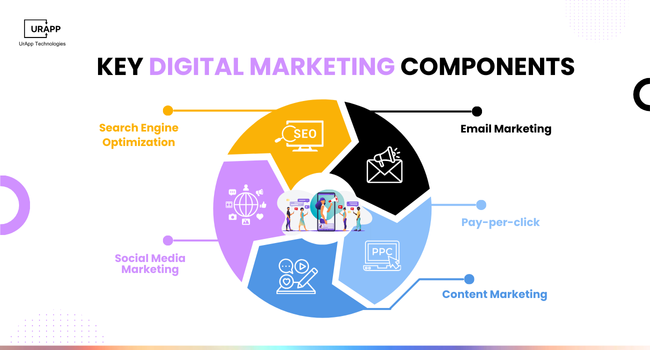
Search Engine Optimization
- Among the many other important pillars in digital marketing, SEO is one of the most important ones. The visibility and your website's online presence can only be achieved if you have incorporated a good SEO, as it attracts your target audience and being in organic traffic. Businesses nowadays go for SEO optimized content to rank higher in SERPS and shine brighter among the competitors.
Social Media Marketing
- The Role of Social Media in Expanding Business Reach is outstanding. According to Statista 5.24 billion people around the world now use social media. Which makes it a secret ingredient for companies that offer digital marketing solutions. The most commonly used platforms are Facebook, Instagram, tiktok and YouTube and their usage enables brands to interact with the customers and This form of marketing allows for direct interaction with consumers, fostering engagement.
Email Marketing
- Email marketing is another important component of digital marketing. Without including any third party, companies send promotional messages and emails to their customers, letting them know about the latest deals, products and services. This sort of communion creates engagement and repeat business.
Pay-per-click
- PPC, or pay-per-click, advertising enables companies to purchase visibility on social media and search engines. Google adverts and Facebook Ads are two notable instances of this method, in which marketers pay only when users click on their adverts.
Content Marketing
- Another important component of digital marketing is content marketing. A proper content marketing helps your user understand your brand, products/services. User guides, blog articles, post descriptions and videos are some examples of content marketing. All these provide a great amount of information and build authority. The benefits of content marketing are uncountable as it guides your users on things they don't know they want or need.
Traditional Marketing Vs Digital Marketing: The Differences
With digital marketing, you can target specific audience segments with precision. By analyzing data and using algorithms, digital marketing targets potential customers based on their demographics, interests, and online behavior, unlike traditional marketing, which casts a wide net.
| Aspect | Traditional Marketing | Digital Marketing |
|---|---|---|
| Audience Reach | Broad but less targeted | Highly targeted and measurable |
| Cost | Often more expensive | Generally more cost-effective |
| Engagement | Passive consumption | Active interaction and engagement |
| Metrics and Analytics | Difficult to measure | Easily measurable with analytics tools |
| Flexibility | Less flexible and slower to adapt | Highly adaptable with real-time adjustments |
Benefits of Traditional Marketing vs Digital Marketing
| Traditional Marketing Benefits | Digital Marketing Benefits |
|---|---|
| Builds strong brand trust and recognition through familiar channels like TV, print, and radio | Targets specific audience segments with precision using data and online platforms |
| Creates long-lasting impressions and emotional connections with audiences | Enables real-time monitoring and analytics to optimize campaigns on the go |
| Effective for local communities and word-of-mouth trust-building | More cost-effective with better ROI through targeted ads and affordable online platforms |
| Ideal for reaching audiences who prefer traditional media | Scalable globally and adaptable to changing audience behavior quickly |
.
When to Use Traditional Marketing vs Digital Marketing?
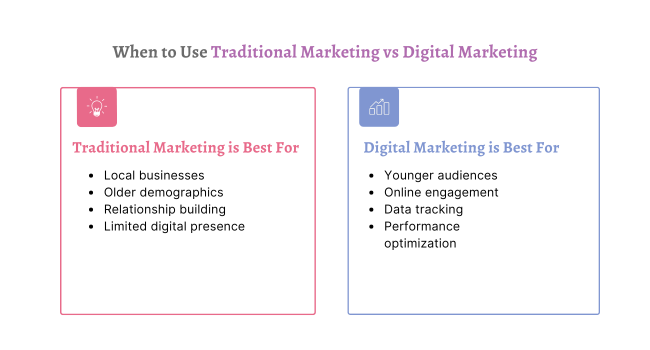
Traditional Marketing is Best For:
Traditional marketing methods remain effective when local companies try to establish relationships with their geographical markets. Traditional marketing techniques prove beneficial for businesses targeting elderly populations who avoid digital communication.
Digital Marketing is Best For:
Organizations that wish to reach younger target audiences should use digital marketing approaches because these consumers spend more time online. This marketing method works for companies that need quantifiable data and analytics to enhance their marketing strategy performance through data-driven improvements.
Conclusion:
Businesses today need to understand Traditional marketing vs digital marketing for smoother marketing operations. Different marketing approaches provide specific advantages that strengthen marketing strategies. Companies need to review their target market segment and business requirements to establish an effective marketing framework.
To integrate your one-of-a-kind marketing vision you should join forces with a Custom Mobile App Development Company to expand your digital operations.